

Choosing the Right Camera: Sony, Canon, Fujifilm, Nikon & Lumix
When you walk into our store you’ll hear people passionately advocating for their favourite brand. Sony users praise sharpness and autofocus; Canon shooters rave about color; Fujifilm fans wax lyrical about film simulations; Nikon devotees highlight ergonomics; Lumix enthusiasts tout video features. Having tested and sold gear from each brand, I know every system has something special—there’s no one‑size‑fits‑all solution. What matters is how a camera’s strengths align with your style, whether you’re just starting out or already shooting professionally.
Sony: Sharp, Flexible and Adaptive

Sony’s mirrorless platform has been open to third‑party lens makers since 2011, so there’s an enormous variety of optics—from budget primes to exotic telephotos—that fit E‑mount bodies. Autofocus is another hallmark: Sony’s Real‑time Eye AF continually tracks human and animal eyes for tack‑sharp portraits. The latest A9 III even introduces the world’s first full‑frame global‑shutter sensor, enabling blackout‑free 120 fps bursts and lightning‑fast shutter speeds. In practice, Sony files can look “clinical” out of camera, but that neutrality gives you lots of latitude in post‑production.
Personal note: For me, Sony cameras are workhorses. The neutral color palette and precise Eye AF make them ideal for commercial jobs where I plan to edit heavily. They may not have much character straight out of the box, but they’re incredibly malleable. If you’re curious, check out our Sony A9 III product page, where we’ve got one in stock.
Canon: Elegant Color and Intuitive Use

Canon’s Dual Pixel CMOS AF technology uses two photodiodes on each pixel so every pixel can perform both imaging and phase‑detection autofocus. This design delivers fast, accurate focus across a large portion of the frame. The second generation integrates deep‑learning subject detection for even smarter tracking. Canon also offers approachable long lenses, like the RF 600 mm f/11, which is lightweight and surprisingly affordable.
Personal note: When I first heard customers rave about Canon’s “color science,” I rolled my eyes. Then I shot with the R6 Mark II and R5 Mark II, and I understood: colors are warm, vibrant and pleasing without being garish. The menu system is straightforward and the cameras feel great in hand. The downside? RF lenses aren’t cheap and the mount remains closed, so you’re largely limited to Canon glass. Interested? See our Canon R6 Mark II and Canon R5 Mark II listings.
Fujifilm: Creative Film Simulations and Medium‑Format Joy

Fujifilm stands apart with its film simulations: Provia provides standard colors; Velvia boosts saturation—perfect for sunsets; ASTIA gives a soft, bright look; Classic Chrome evokes documentary tones; and Monochrome uses light and shadow to stimulate creativity. These modes make shooting feel like choosing film stock and reduce your editing workload. Even better, Fujifilm packs a 40 MP sensor into compact cameras like the X100VI, giving you room to crop without losing detail.
Personal note: I took the X100VI to Alaska and had a blast. Its 40 MP files let me digitally zoom into mountain peaks without worrying about quality, and flipping through film simulations is just plain fun. Our store’s Fujifilm X100VI page has more details if you want to experience this little powerhouse yourself. On the medium‑format side, the GFX100S II’s 102 MP sensor produces images with incredible character—my only regret is selling our rental unit. If you’re intrigued by medium format, you can find it on our site at GFX100S II Body.
Nikon: Ergonomics, Telephoto Innovation and Versatility
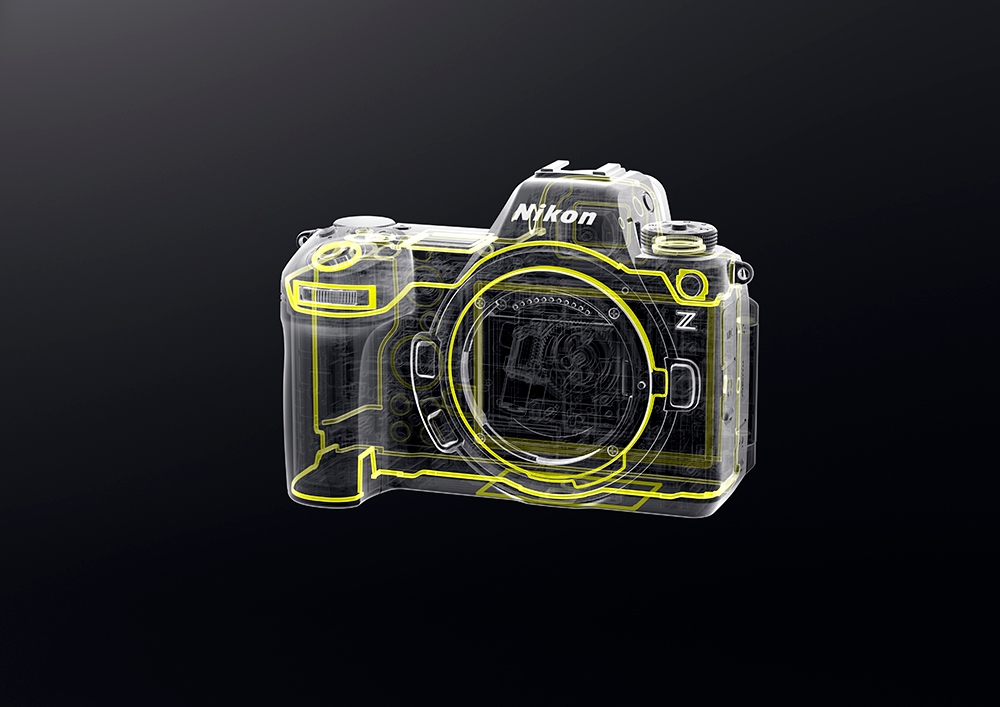
Nikon often wins on handling and weather‑sealed construction. One standout feature is the telephoto lenses with built‑in 1.4× teleconverters: the 600 mm f/4 Z lens lets you flip a switch and turn it into an 840 mm f/5.6 without attaching extra glass. Nikon’s FTZ adapter also allows more than 360 F‑mount lenses to be used on Z‑series bodies with full autofocus and auto‑exposure, while adding in‑body stabilisation to non‑VR lenses. In short, Nikon offers a path for both new mirrorless shooters and long‑time DSLR owners with shelves of lenses.
Personal note: Although I haven’t shot Nikon extensively, the Z6 III’s 3D tracking blew me away. I literally sprinted toward a customer while they fired off shots, and the autofocus stayed glued to my face. The new Nikon ZR cinema camera (developed with RED) packs 6K RAW recording and 32‑bit float audio into a $2,200 body, making cinema‑quality footage accessible. Both cameras are available on our site: Nikon Z6 III and Nikon ZR 6K Cinema Camera.
Lumix: Hybrid Video Powerhouse
.jpg/960px-Panasonic_LUMIX_S5_II_(52682131682).jpg)
Panasonic’s S5 II and S5 IIX lean heavily into video. Their 24.2 MP full‑frame sensors record 6K30p 10‑bit or unlimited 4K60p 4:2:2 video and use a 779‑point phase‑detection autofocus system. These cameras offer improved autofocus and 6K capture, plus a five‑axis stabilisation system that’s 200% more effective for handheld video. Panasonic also includes a high‑resolution mode that shifts the sensor to produce 96‑MP stills.
Personal note: We recently started carrying Lumix, and the feature list is crazy for the price. Open Gate recording lets you shoot in a taller aspect ratio and crop later; built‑in LUTs mean you can preview your grade in camera; the sensor‑shift mode produces incredibly detailed stills without switching to medium format. Check out our Lumix S5 II product page if you’re a hybrid shooter who values both stunning video and high‑resolution photos.
Final Thoughts
Each brand brings distinctive strengths:
- Sony offers unmatched autofocus and post‑production flexibility.
- Canon delivers beautiful color and simple, reliable operation.
- Fujifilm invites creativity through film simulations and high‑resolution sensors.
- Nikon combines robust ergonomics with clever telephoto and adapter options.
- Lumix packs pro‑level video features and high‑res stills into affordable bodies.
Choosing a camera isn’t about taking sides; it’s about picking the tool that helps you create the images you envision. Swing by our shop at 7965 S Main St. in Oak Creek, test a few bodies and lenses, and let’s find the right fit. Every dollar you spend with us goes back into the business to make your experience better—no corporate strings attached.